Vivarium CSU Simulating lipid lowering
Model Overview
Objective
The objective is to model and simulate the Public Health Impact of fixed dose combination on LDL cholesterol and ASCVD (Ischemic heart disease, Ischemic stroke) in Brazil, China, France, Spain, and Russia. This includes the intervention targets of reducing deaths and DALYs due to Ischemic Heart Disease and Ischemic Stroke based on the intervention scenario.
Term |
Definition |
Notes |
|---|---|---|
High LDL-c in Business As Usual (BAU) scenario |
LDL-c > 4.9 |
|
High LDL-c in intervention scenarios |
LDL-c > 3.0 |
Determined by CV risk SCORE |
Hitting target |
50% or more reduction over untreated LDL-c |
|
High potency statin |
Refers to high potency of drugs: atorvastatin, rosuvastatin |
Defined by guidelines and discussion with external private sector experts |
Low potency statin |
Refers to low potency of drugs: simvastatin, pravastatin, fluvastatin |
Defined by guidelines and discussion with external private sector experts |
High dose |
40mg and up |
|
Low dose |
under 40mg |
|
CV risk category: very high risk |
past CVD event |
|
CV risk category: high risk |
CV score greater than 10 or severe diabetes or severe CKD |
|
CV risk category: moderate risk |
score between five and 10 or mild/moderate diabetes/CKD or SBP greater than 180 |
|
CV risk category: low risk |
CV score less than five |
Intervention Definitions
Business As Usual (BAU) scenario
A baseline scenario projecting current treatment (per location), patient adherence, and trends of LDL-c and ASCVD outcomes, for the current year and five years into the future. (2019-2024). This scenario will be used to compare the two subsequent scenarios. The definition of adherence is the probability of a patient taking their medication 80% of the time. The proportion of patients that are adherent come from literature. More detailed information about adherence and probability of prescription given are included in the Data Artifact and subsequent to change during the development of the Zenon project.
2019 Guidelines with multiple pills scenario
For each of the simulated populations/locations, IHME will run a counterfactual scenario in which all initial variables are identical to the BAU Scenario, but in which treatments follow the ESC 2019 Guidelines using individual components (i.e., multiple pills) for simulants meeting guideline criteria. The same treatment pathway will be applied to all countries based on ESC 2019 Guidelines. The guidelines propose a more proactive treatment than current treatment practices. More information about this scenario and associated adherence to multiple pills treatment can be found in the Treamtent Ramp below and is included in the Data Artifact.
2019 Guidelines with combination single pill scenario
For each of the simulated populations/locations, IHME will run a counterfactual scenario in which all initial variables are identical to ‘2019 Guidelines with multiple pills scenario’, but in which treatments follow the ESC 2019 Guidelines using FDC rather than individual components for simulants meeting guideline criteria. This scenario would include an assumption about the increased adherence to single pill treatment compared to multiple pills. More information about this scenario and the increased adherence to single pill treatment can be found in the Treamtent Ramp below and is included in the Data Artifact.
Questions of Interest
Hi david, please fill me out
Scope of Modeling
Concept Model Diagram
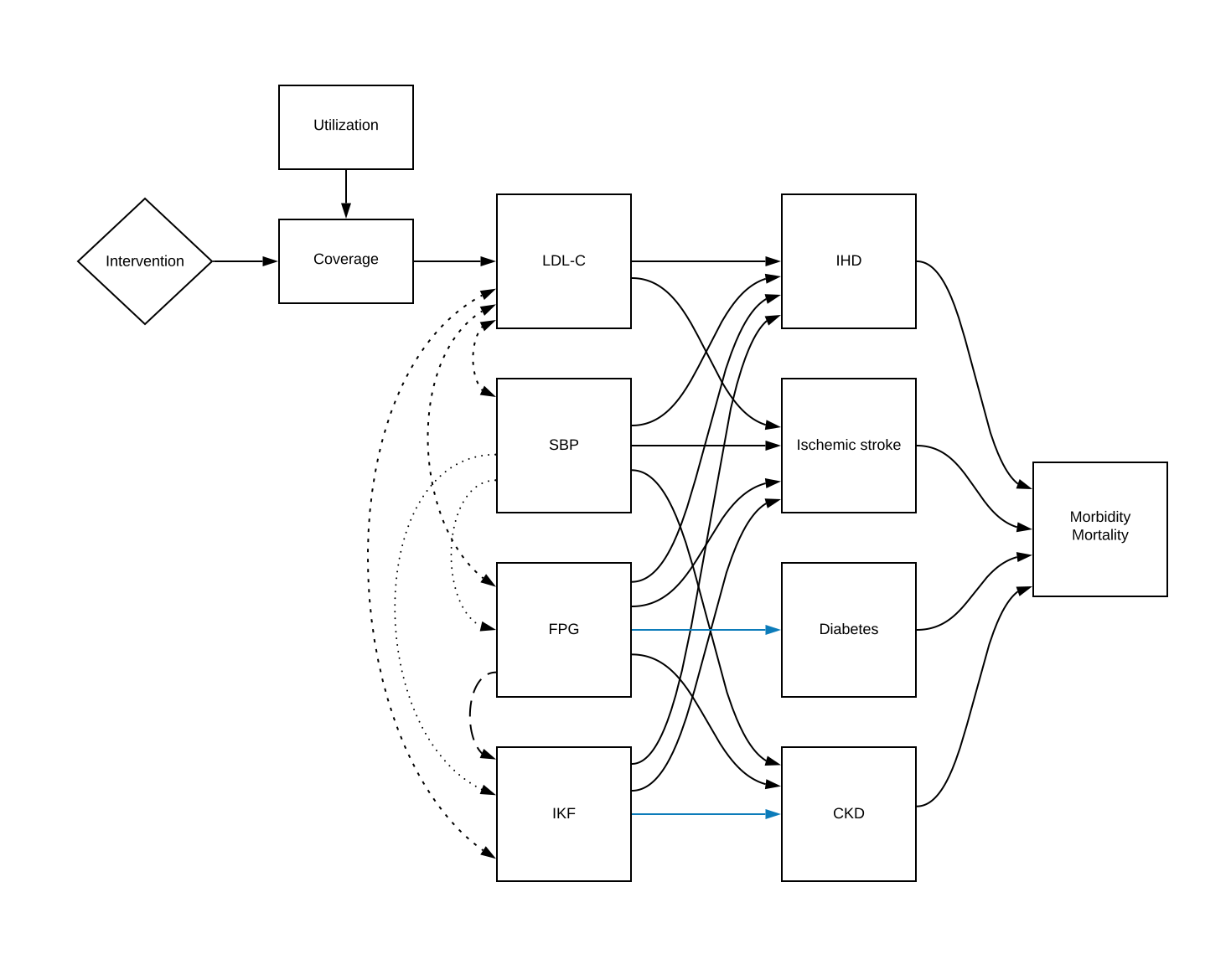
Model Components
Time
Start and end date: Jan 1, 2019 – Dec 31, 2024
One year of lead in time (where all the scenarios are the same) and scenarios start to change at Jan 1, 2020.
Simulation time step: 28 days to capture cardiovascular events and treatment timesteps
Demographics
Locations: Brazil, China, France, Italy, Spain, Russia
Population: Prospective open cohort of 40-74 year olds
Size of largest starting population: 100,000 simulants
Youngest start-age and oldest end-age: 30 - 100 years
Exit age (at what age to stop tracking simulants): 101 years
Fertility: Not applicable
GBD Causes
GBD Risks
PAF-of-1 Cause/Risk Pairs
Risk-Outcome Relationships
Coverage Gap Framework
Eligible to Treatment Criteria
Simulants who are eligible to treatment fall in the criteria of: Starting age group of 40 years old or greater. No new treatment would be given to simulants over 75 years old but they continue treatment.
We will assign treatment to new simulant patients who are currently not on treatment but meet the treatment criteria, based on scenario, and simulants who are currently on treatment but have had a CVD event or meet the treatment criteria to increase dosage. Treatment is not a one-time treatment but is a continuing treatment over 5 years. During the 5 year simulation, treatment for a patient may stay constant or may ramp up, based on the simulant and their LDL-c level, SBP level, or if they have had a CVD event.
Utilization estimates used in this model are for the average number of outpatient healthcare visits, which will inform the treatment ramp of when a patient will seek care through a visit and get their LDL-c levels measured. The utilization rates are based on GHDx, ‘Global Inpatient and Outpatient Health Care Utilization, Unit Costs, and Costs and Services Needed to Achieve Universal Health Coverage 1990-2016’.
Initialization of patients into treatment for BAU
Initialization Strategy
B+C+D = (C+D) / (1 – pr_rx* pr_hitting_target) pr_rx = (B+D) / (B+C+D) # db has from literature (table 2) pr_hitting_target = B / (B + D) # db has from literature (table 3) C + D = pr_high_ldl_c
we can solve for B in the first line, and then solve for D in the second line
Need:
D / (C+D) = pr[treated | LDL >= 5]
B / (A+B) = pr[treated | LDL < 5]
Next we need: (all these normals dists should be truncated normals, truncated to be between [0,1])
Pr[treatment profile t | on treatment] (where t is a treatment profile, including drugs, dosage)
Table 6 says % on each drug; table 8 (not numbered) says % on mono vs multi; %fdc if multi
Abie recommends:
Decide if they are on monotherapy: location-specific probability chosen for all simulants from N(mean_value, sd_value)
If they are not on monotherapy: decide if they are on FDC, location-specific probability chosen for all simulants from N(mean_value, sd_value)
Now to table 6—
if you are on FDC, treatment profile is low-potenecy statin + ezetimibe
if you are on multiple individual pills, treatment profile is statin + ezetimibe
find a location-specific probability of high potency statin from N(mean_value, sd_value), decide if they are on high or low potency statin
they also get ezetimibe
if you are on monotherapy, decide if it is ezetimibe, fibrates, high-potency statin, or low-potency statin by taking values:
p_eze_draw ~ N(mean_value, sd_value) population-specific
p_fib_draw ~ N(mean_value, sd_value), population-specific
p_high_pot_stat ~ N(mean, sd)
p_low_pot_stat ~ N(mean, sd)
T = p_eze_draw + p_fib_draw + p_high_draw + p_low_draw
Pr[drug = D] is p_eze_draw / T for D = ezetimibe, p_fib_draw / T for D = firbates, p_high_pot_stat / T for D = high potency statin, p_low_pot_stat / T for D = low potency statin
Then we need: Pr[adherence | on treatment profile t, IHD/IS status] This is categorical (adherent/non-adherent), and comes from table 4: If not IHD or IS, for monotherapy OR FDC, adherent with probability derived from Table 4, first part location-specific value drawn from N_[0,1](mean, std)
If multiple individual pills, Adherence with multiple pills (primary prevention) location-specific row from Table 4 location-specific value drawn from N(mean, std)
If IHD or IS, for monotherapy OR FDC, adherent with probability from Table 4 location-specific rows for “Adherence after MI (one pill)” location-specific value drawn from N(mean, std) If IHD or IS, for multiple individual pills, adherent with probability from Table 4 location-specific rows for “Adherence after MI (multi-pill)” location-specific value drawn from N(mean, std)
Finally, we need to know: Untreated LDL-C level | treated, treatment profile t, adherence yes/no If not treated or not adherent, untreated LDL-c = LDC-c (drawn from GBD) If treated, and adherent, look up multiplier in treatment table 3 (second part): If monotherapy, treatment profile is {t}, eff_t ~ N(mean, sd) same for all individuals, and
Untreated LDL-C = LDL-C / (1 - eff_t)
If FDC or multiple individual pills, treatment profile is {t, s}, eff_t ~ N, eff_s ~ N(mean_s, sd_s)
Untreated LDL-C = LDL-C / ((1 - eff_t) * (1 - eff_s))
(same effect for all indiviuals, which we will note in the limitations)
This effect size calculation should also be used during the simulation to determine if a patient is ‘at target’ - which is defined as a reduction in LDL-C of 50% or more over untreated LDL-C level.
To get on FDC: prob(adding 2nd drug)*prob(FDC if multi drug). These values are listed in ‘Table 5: Probability of adding 2nd drug v. increasing dose’ and ‘Table 8: Distribution of therapy type’ below).
BAU parameter data tables
Information about Table 1: For post-MI visits, the patient is given Rx with probability = 1. LDL-C should be recorded in the simulation, but its value does not impact treatment decision in any of the 3 scenarios.
For background visits, the patient may or may not have their LDL-C measured, and the probability that they do measure LDL-C is given by the data in Table 1.
For follow-up visits, the LDL-C should be measured with probability = 1 and recorded in the simulation (to determine if the patient has reached target), and may impact Tx decisions (e.g. increasing dose if not at target).
location |
mean_value |
sd_value |
|---|---|---|
brazil |
0.474830827 |
0.106169173 |
china |
0.225714286 |
0.083621109 |
france |
0.515 |
0.035 |
italy |
0.425 |
0.025 |
russia |
0.28925 |
0.259039934 |
spain |
0.505333333 |
0.023170863 |
Todo
Need input from medical experts - should we treat patients with 100% probability in the 2 intervention scenarios? As is, we are not - we will use the prob(Rx| high LDL-c) from below Table 2.
Information about Table 2: For background visits, if a patient is above the relevant threshold (4.9 mmol/L in BAU and according to the treatment algorithm involving SCORE, DM/CKD state, and SBP in the 2 intervention scenarios), they may or may not (therapeutic inertia) be given Rx. Whether they are given Rx given that they are above the threshold is determined by the data in Table 2.
location |
mean_value |
sd_value |
|---|---|---|
brazil |
0.423 |
0.188688673 |
china |
0.318645398 |
0.184370506 |
france |
0.505 |
0.115 |
italy |
0.5256 |
0.2064 |
russia |
0.391 |
0.282128517 |
spain |
0.336697183 |
0.104302817 |
location |
mean_value |
sd_value |
|---|---|---|
brazil |
0.47934962 |
0.10365038 |
china |
0.383591158 |
0.17033555 |
france |
0.409 |
0.009 |
italy |
0.341 |
0.001 |
russia |
0.488 |
0.2535705 |
spain |
0.4425 |
0.1145 |
adherence_parameter |
location |
mean_value |
sd_value |
|---|---|---|---|
Adherence - one pill, no MI |
brazil |
0.55 |
0.11 |
Adherence - one pill, no MI |
china |
0.49 |
0.10 |
Adherence - one pill, no MI |
france |
0.66 |
0.14 |
Adherence - one pill, no MI |
italy |
0.43 |
0.09 |
Adherence - one pill, no MI |
russia |
0.38 |
0.08 |
Adherence - one pill, no MI |
spain |
0.70 |
0.15 |
Adherence - multi-pill, no MI |
brazil |
0.29 |
0.06 |
Adherence - multi-pill, no MI |
china |
0.23 |
0.05 |
Adherence - multi-pill, no MI |
france |
0.40 |
0.09 |
Adherence - multi-pill, no MI |
italy |
0.17 |
0.04 |
Adherence - multi-pill, no MI |
russia |
0.12 |
0.03 |
Adherence - multi-pill, no MI |
spain |
0.44 |
0.09 |
Adherence after MI (one pill) |
brazil |
0.67 |
0.14 |
Adherence after MI (one pill) |
china |
0.62 |
0.13 |
Adherence after MI (one pill) |
france |
0.79 |
0.17 |
Adherence after MI (one pill) |
italy |
0.56 |
0.12 |
Adherence after MI (one pill) |
russia |
0.51 |
0.11 |
Adherence after MI (one pill) |
spain |
0.82 |
0.18 |
Adherence after MI (multi-pill) |
brazil |
0.41 |
0.09 |
Adherence after MI (multi-pill) |
china |
0.36 |
0.08 |
Adherence after MI (multi-pill) |
france |
0.53 |
0.11 |
Adherence after MI (multi-pill) |
italy |
0.30 |
0.06 |
Adherence after MI (multi-pill) |
russia |
0.25 |
0.05 |
Adherence after MI (multi-pill) |
spain |
0.57 |
0.12 |
Information about Table 5: At a follow-up visit, if a patient has not reached their target (defined as 50% reduction in their untreated LDL-C), they may be given a higher dose, a 2nd drug or a different statin (if on statin). The probability of each is given in Table 5. These numbers are global, not location specific.
probability_type |
mean_value |
sd_value |
|---|---|---|
prob increasing dose if not at target |
0.4175 |
0.02384848 |
prob of adding 2nd drug if not at target |
0.38 |
0.018708287 |
prob of switching drugs if not at target |
0.1925 |
0.024874686 |
Update: BAU ONLY mean (sd); prob increasing dose if not at target = 0.07 (0.02); prob of adding 2nd drug if not at target = 0.06 (0.02); prob of switching drugs if not at target = 0.03 (0.02); prob of no change (BAU only) = 0.84 (0.02)
Note: patients in BAU will “ramp-up” their treatment if they are not “at target”, which is defined as a 50% or more reduction in their untreated LDL-C. Reduction in LDL-C due to treatment is determined based on the particular treatment given to the simulant, whether they are adherent and intervention efficacy data in Table 9. Specifically: LDL-C reduction = is_adherent(0 or 1)*reduction_in_ldlc for their particular drug/dose Rx.
Note: Ramp-up should be monotonic in terms of average efficacy: lifestyle_intervention < fibrates < ezetimibe < LP LD statin < LP HD statin < HP LD statin < HP HP statin < 2-drug combination (either as 2-pill or FDC, depending on scenario). The probabilities in Table 5 above determin if dose will increase (from LD to HD) or if potency will increase (from LP to HP) or if a 2nd drug will be added (note BAU Table 5 includes “prob of no change”, while intervention scenario Table 5 does not - so there are 2 Table 5s). These are mutually exclusive events - only one can change at any given time doctor visit. Thus, it is ok for a patient to transition from LP LD statin to HP LD statin in one step - even though they jumped over LP HD statin - since only potency changed in this example.
Information about Table 6: The specific Rx for each patient (at initialization and for new patients during the simulation) is determined by the data in Table 6 - current treatment practice distribution by drug type. First, the type of drug is determined (statin, ezetimibe or fibrate). Then the sub-type of statin is determined for patients on statin. In BAU, dosing is 40mg for low potency statin (called “high dose”) and 20mg for high potency statin (called “low dose”). In the 2 intervention scenarios, the initial dose is “high dose” of high potency statin.
current_prescription |
location |
mean_value |
sd_value |
|---|---|---|---|
% on ezetimibe |
brazil |
0.10 |
0.10 |
% on ezetimibe |
china |
0.00 |
0.01 |
% on ezetimibe |
france |
0.04 |
0.04 |
% on ezetimibe |
italy |
0.10 |
0.10 |
% on ezetimibe |
russia |
0.00 |
0.00 |
% on ezetimibe |
spain |
0.10 |
0.09 |
% on fibrates |
brazil |
0.14 |
0.12 |
% on fibrates |
china |
0.09 |
0.05 |
% on fibrates |
france |
0.13 |
0.07 |
% on fibrates |
italy |
0.01 |
0.00 |
% on fibrates |
russia |
0.01 |
0.00 |
% on fibrates |
spain |
0.00 |
0.00 |
% on high potency statin |
brazil |
0.38 |
0.07 |
% on high potency statin |
china |
0.53 |
0.16 |
% on high potency statin |
france |
0.50 |
0.07 |
% on high potency statin |
italy |
0.61 |
0.23 |
% on high potency statin |
russia |
0.56 |
0.20 |
% on high potency statin |
spain |
0.50 |
0.24 |
% on low potency statin |
brazil |
0.37 |
0.16 |
% on low potency statin |
china |
0.37 |
0.16 |
% on low potency statin |
france |
0.33 |
0.03 |
% on low potency statin |
italy |
0.28 |
0.10 |
% on low potency statin |
russia |
0.44 |
0.12 |
% on low potency statin |
spain |
0.40 |
0.12 |
Information about Table 7: If a patient experiences a side effect, they will be given a different drug on their next visit. The treatment algorithm assumes these patients are not adherent.
location |
mean_value |
sd_value |
|---|---|---|
global |
0.032833 |
0.020103206 |
Information about ‘Distribution of therapy type’ table: This is not used as a BAU parameter directly. This table was used to calculate ‘adherence’ parameters.
therapy_type |
location |
mean_value |
sd_value |
|---|---|---|---|
% on monotherapy |
brazil |
0.704 |
0.002058843 |
% on monotherapy |
china |
0.98 |
0.001 |
% on monotherapy |
france |
0.846333333 |
0.0025 |
% on monotherapy |
italy |
0.783854167 |
0.0215 |
% on monotherapy |
russia |
0.9575 |
0.075 |
% on monotherapy |
spain |
0.677651905 |
0.001981788 |
% on multi-drugs |
brazil |
0.296 |
0.195896723 |
% on multi-drugs |
china |
0.019 |
0.012574452 |
% on multi-drugs |
france |
0.153666667 |
0.101698637 |
% on multi-drugs |
italy |
0.215625 |
0.142703483 |
% on multi-drugs |
russia |
0.0425 |
0.028127063 |
% on multi-drugs |
spain |
0.322348095 |
0.213334242 |
% on FDC if multi drug |
brazil |
0.551724138 |
0.035878986 |
% on FDC if multi drug |
china |
0.604 |
0.03927852 |
% on FDC if multi drug |
france |
0.68 |
0.04422085 |
% on FDC if multi drug |
italy |
0.608695652 |
0.039583881 |
% on FDC if multi drug |
russia |
0.604 |
0.03927852 |
% on FDC if multi drug |
spain |
0.576923077 |
0.037517689 |
drug |
location |
dose |
mean_value |
sd_value |
|---|---|---|---|---|
High potency statin |
global |
low |
0.407222222 |
0.095644503 |
Low potency statin |
global |
low |
0.23 |
0.037917954 |
High potency statin |
global |
high |
0.528333333 |
0.022484563 |
Low potency statin |
global |
high |
0.332083333 |
0.075051929 |
Combo pill BAU |
global |
N/A |
0.46 |
0.11 |
Combo pill Intervention Scenario |
global |
N/A |
0.60 |
0.14 |
Fibrates |
global |
N/A |
0.12 |
0.021027289 |
Ezetimibe |
global |
N/A |
0.129 |
0.044 |
Lifestyle intervention |
global |
N/A |
0.039053803 |
0.020686456 |
average_dose_in_mg |
location |
mean_mg_value |
sd_mg_value |
|---|---|---|---|
High potency statin |
global |
14.57 |
4.06 |
Low potency statin |
global |
32.36 |
11.66 |
Interventions
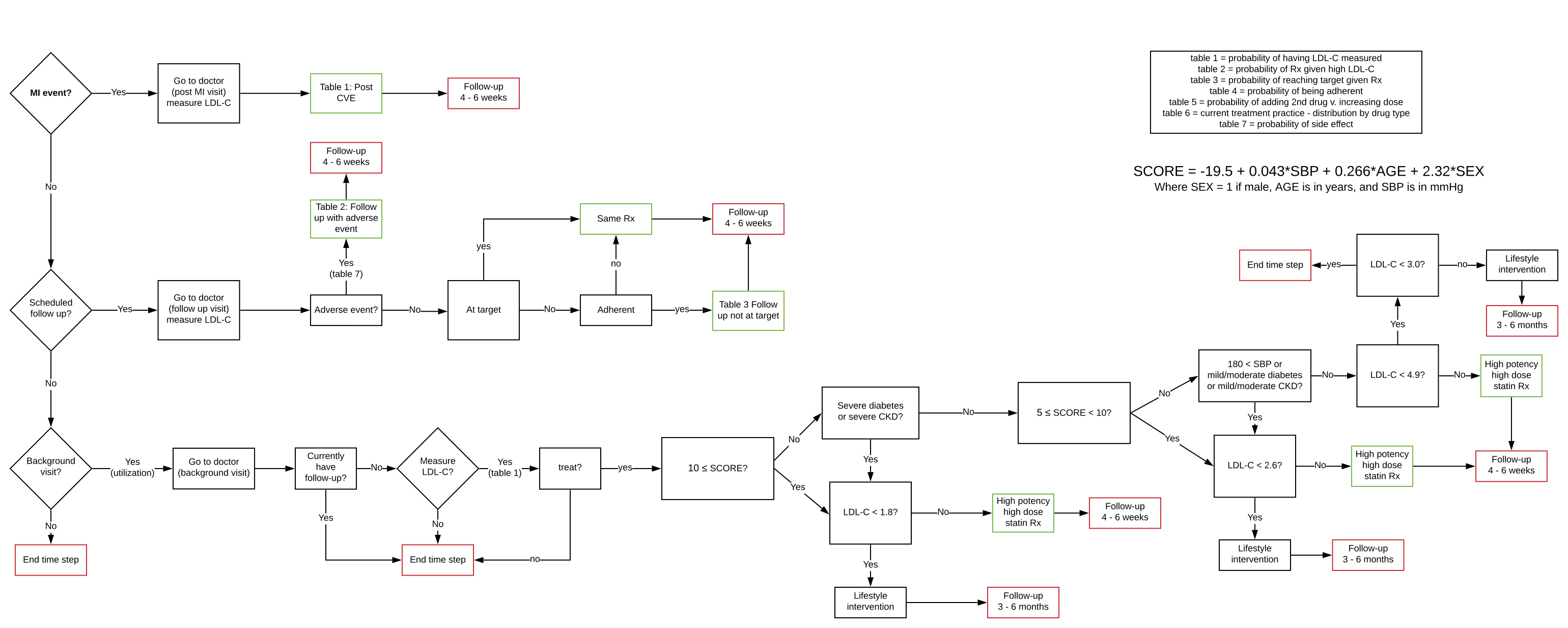
Both treatment scenarios are based on the CV RISK score, which is a function of Age, Sex and SBP:
SCORE = -19.5 + 0.043*SBP + 0.266*AGE + 2.32*SEX wher SEX = 1 if male, AGE is in years, and SBP is in mmHg
There are two caveats involving DM state and CKD state, which are included in the treatment diagram. New patients will be started on a high dose, high potency statin (max dose of a statin randomly selected from the “high potency” list according to the weighted probability of use for each statin flavor). If a patient experiences a side effect, they will either have their dose cut in half – unless they are at the minimum dose already, in which case they will be given a low potency statin. If they are not at target, they will combine these changes with addition of ezetimibe.
Initialization of patients into treatment for intervention scenarios
The 2 intervention scenarios (guidelines + multiple pills and guidelines + single, combination pill) are initialized the same way as the BAU case. The difference is that in the intervention scenarios, treatment criteria have changed – there is now a lower threshold for treatment (based on a patient’s CV risk SCORE), including caveats for DM and CKD state.
SCORE is calculated according to the equation in the concept model documentation. An additional difference between these scenarios and the BAU case is that follow-up visits here are scheduled at 4-6 week intervals instead of the 3-6 month timeframe in BAU. In terms of treatment options – here, new patients are started on a low dose of high intensity statin. Ramp-up follows the diagram “copy of treatment for engineers”.
Additionally, new patients will start treatment on a high potency, high dose statin. In BAU, this is not necessarily true.
If not at target at follow-up, a second drug will be added (ezetimibe) - as 2-pills in scenario 1 and as FDC in scenario 2. If a patient in either intervention scenario experiences a random adverse event, they will be given a lower dose of the same medication at follow-up.
2019 Guidelines with multiple pills scenario
2019 Guidelines with combination single pill scenario
Treatment Ramp
Business As Usual (BAU) Scenario
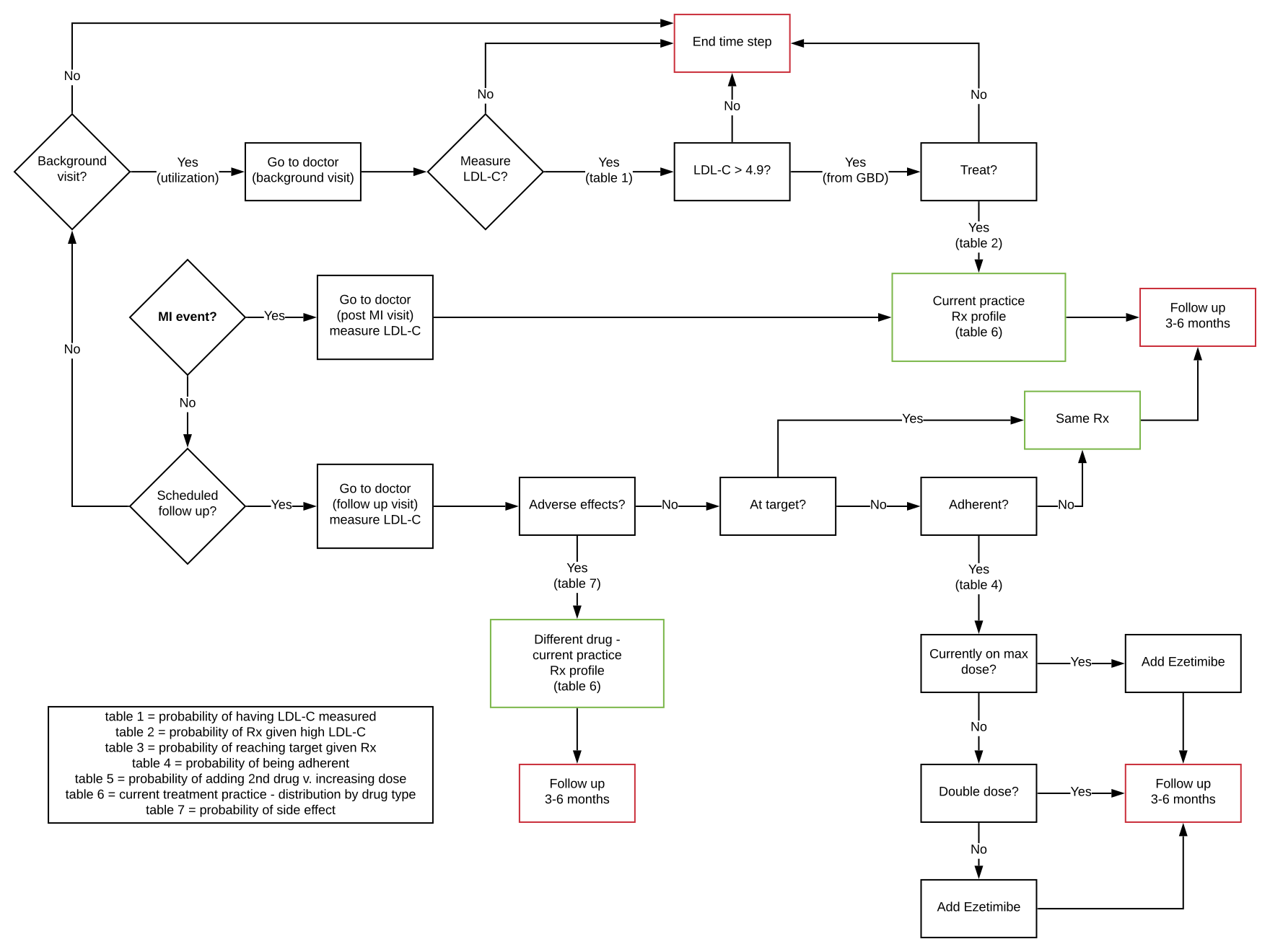
Intervention Scenarios (Both scenarios illustrated)
Desired Model Outputs
subpopulations |
categories |
categories_2 |
|---|---|---|
Hypertension (SBP >= 140 mmHg) |
hypertensive_cat_1 (SBP >= 140 at simulant initalization) |
hypertensive_cat_0 (SBP < 140 at simulant initalization) |
Diabetes (FPG >= 7.0 mmol/L) |
diabetic_cat_1 (FPG >= 7 at simulant initialization) |
diabetic_cat_0 (FPG < 7 at simulant initialization) |
High LDL-C (LDL-C >= 5.0 mmol/L) |
high_ldlc_cat_1 (LDL-C >= 5 at simulant initialization) |
high_ldlc_cat_0 (LDL-C < 5 at simulant initialization) |
Post-ACS |
post_acs_cat_1 (in at least one of the states acute_mi, post_mi, acute_ischemic_stroke, post_ischemic_stroke at simulant initialization) |
post_acs_cat_0 (in none of the states acute_mi, post_mi, acute_ischemic_stroke, post_ischemic_stroke at simulant initialization) |
outcome |
Outcome Metric |
numerator |
denominator |
priority |
notes |
priority_definition |
|---|---|---|---|---|---|---|
All-cause mortality |
Rate per 100k |
number of deaths |
sum of person time |
high |
high = needed for client |
|
DALYs by all four causes |
Rate per 100k |
sum of YLLs for cause i + sum of YLDs for cause i |
sum of person time |
high for IHD and IS, mid for CKD and Diabetes |
mid = needed for validation |
|
YLLS by all four causes |
Rate per 100k |
sum of YLLs for cause i |
sum of person time |
high for IHD and IS, mid for CKD and Diabetes |
low = needed for additional research |
|
YLDs by all four causes |
Rate per 100k |
sum of YLDs for cause i |
sum of person time |
high for IHD and IS, mid for CKD and Diabetes |
||
Deaths by four causes |
Rate per 100k |
number of deaths for cause i |
sum of person time |
high for IHD and IS, mid for CKD and Diabetes |
||
Mean FPG |
mmol/L |
sum of FPG * person time |
sum of person time |
mid |
||
Treatment Coverage |
Percent |
sum of person time on any treatment |
sum of person time |
high |
||
Multidrug Coverage |
Percent |
sum of person time on multiple drugs |
sum of person time on any treatment |
high |
||
FDC Coverage |
Percent |
sum of person time on FDC |
sum of person time on any treatment |
high |
||
Population achieving target LDL-c |
Percent |
sum of person time at/below target LDL-c |
sum of person time |
high |
||
CV risk score |
Number |
sum of risk score * person time |
sum of person time |
low |
||
Proportion of people adherent |
Percent |
sum of person time adherent |
sum of person time |
high |
||
Mean SBP |
mmHg |
sum of SBP * person time |
sum of person time |
mid |
||
Mean LDL-c level |
mmol/ L |
sum of LDL-C * person time |
sum of person time |
high |
||
Incidence of Ischemic Stroke |
Rate per 100k |
number of transitions from (susceptible_to_ischemic_stroke or post_ischemic_stroke) to acute_ischemic_stroke |
sum of person time |
high |
||
Incidence of Ischemic Heart Disease |
Rate per 100k |
number of transitions from (susceptible_to_ihd or post_mi) to acute_mi |
sum of person time |
high |
Location name |
Year |
Subpopulations |
Age group |
Sex |
Scenario |
Outcome |
Outcome Metric |
|---|---|---|---|---|---|---|---|
Brazil |
2020 |
Hypertension (SBP >= 140 mmHg) |
40-44 |
Male |
Business As Usual |
All-cause mortality |
Rate per 100k |
China |
2021 |
Diabetes (FPG >= 7.0 mmol/L) |
45-49 |
Female |
Intervention 1 |
DALYs by all four causes |
Rate per 100k |
Italy |
2022 |
High LDL-C (LDL-C >= 5.0 mmol/L) |
50-54 |
Both |
Intervention 2 |
YLLS by all four causes |
Rate per 100k |
France |
2023 |
Post-ACS |
55-59 |
YLDs by all four causes |
Rate per 100k |
||
Spain |
2024 |
60-64 |
Deaths by four causes |
Rate per 100k |
|||
Russia |
65-69 |
Mean FPG |
mmol/L |
||||
70-74 |
Treatment Coverage |
Percent |
|||||
75+ |
Multidrug Coverage |
Percent |
|||||
40-74 |
FDC Coverage |
Percent |
|||||
All ages |
Population achieving target LDL-c |
Percent |
|||||
CV risk score |
Number |
||||||
Proportion of people adherent |
Percent |
||||||
Mean SBP |
mmHg |
||||||
Mean LDL-c level |
mmol/ L |
||||||
Incidence of Ischemic Stroke |
Rate per 100k |
||||||
Incidence of Ischemic Heart Disease |
Rate per 100k |
Stratification
Stratify by location, age, sex, year, and Subpopulation (listed in Desired Model Outputs).
Observers
Todo
Confirm with RT/SE teams if these are the correct observers or if any observers should be removed/added. I added ‘FPGTimeSeries’, SBPTimeSeries’, and ‘LDLCTimeSeries’ observers to account for the need to be able to provide Mean LDL-C/SBP/FPG value per location/sex/age group/scenario.
For validation and reports, the research team requests the observers needed to create simulant trajectory visualizations. An example simulant trajectory plot is located below.
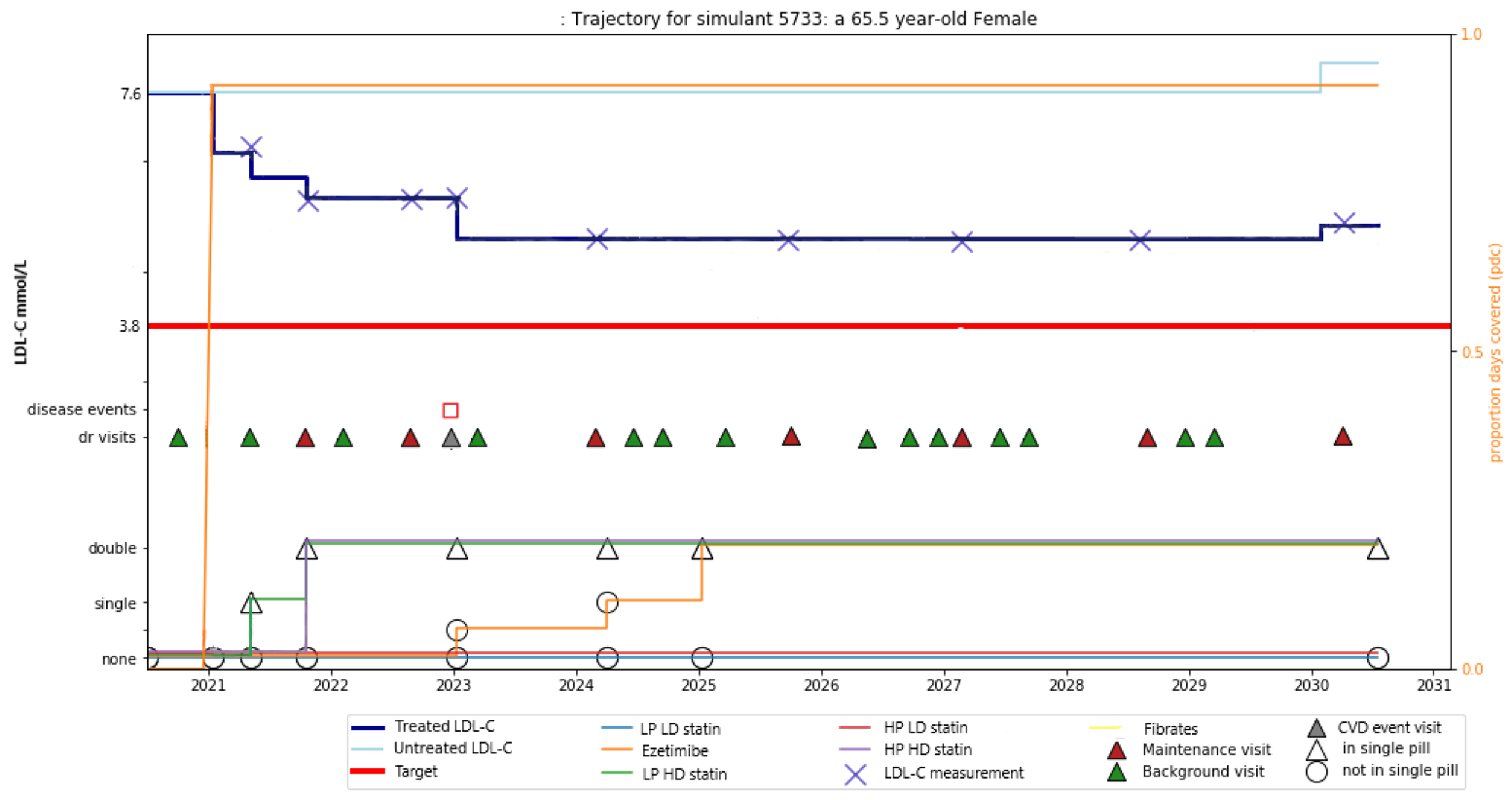
Observer Type |
Definition |
|---|---|
Disability |
Disability observed (by cause) at the simulant-level at each time step |
Medication |
The treatment prescription (medication) observed at the simulation-level throughout the treatment algorithm per intervention scenario |
Disease observer - ‘Ischemic heart disease (IHD)’ |
Count of IHD observed at the simulant-level throughout the simulation |
Disease observer - ‘Ischemic_stroke’ |
Count of Ischemic stroke observed at the simulant-level throughout the simulation |
Disease observer - ‘Chronic kidney disease (CKD)’ |
Count of CKD observed at the simulant-level throughout the simulation |
Disease observer - ‘Diabetes mellitus (DM)’ |
Count of DM observed at the simulant-level throughout the simulation |
LDL-c |
Observed LDL-c level in (mmol/L units) throughout the simulation at the simulant-level |
FPG |
Observed FPG level in (mmol/L units) throughout the simulation at the simulant-level |
IKF |
The category of IKF throughout the simulation at the simulant-level |
SBP |
Observed SBP for simulant at each time step |
Doctor visit |
The number of outpatient visits throughout the simulation at the simulant-level |
Verification and Validation Strategy
Develop hypothesis about how this model will behave
Write assumptions down
Todo
Add assumptions from back-of-the-envelope calculations + preliminary data input validation
Check internal consistency - all epi measures (data inputs) agree and produce results that make sense
Cause-Specific Mortality Rate (CSMR) = Excess Mortality Rate (EMR) * Prevalence for all causes
Check the model outputs as outside sources
for location in Brazil, China, France, Italy, Spain, Russia:
for cause in ischemic_heart_disease, ischemic_stroke, chronic_kidney_disease, diabetes_mellitus:
for measure in incidence, death, yll, yld, daly, emr, csmr:
for age_group in 30-34, 35-39, 40-44, 45-49, 50-54, 55-59, 60-64, 65-69, 70-74, 75-79, 80-84, 85-89, 90-94, 95+:
Simulate history & check against GBD 2017
model_outputs_location_cause_measure_sex_age_group = gbd_2017__location_cause_measure_sex_age_group
Model assumptions validation:
Does the average LDL-C for the population from GBD look like the average LDL-C for the population that is initialized this way? Since we have initialized a certain number of people with specific doses of specific drugs (and we know the efficacy of each drug as a function of dose), we should be able to compare these two population level LDL-Cs.